

![]() |
|
![]() |
|
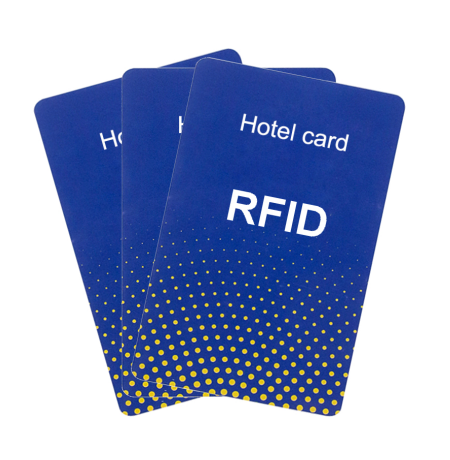
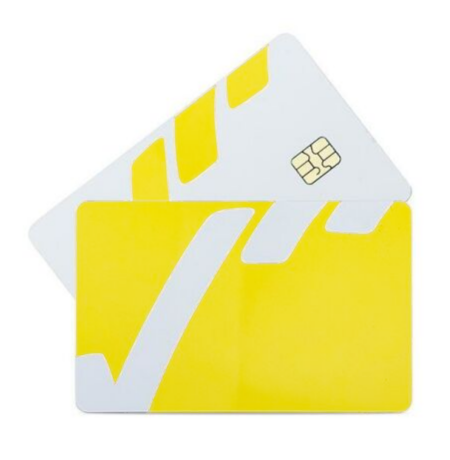
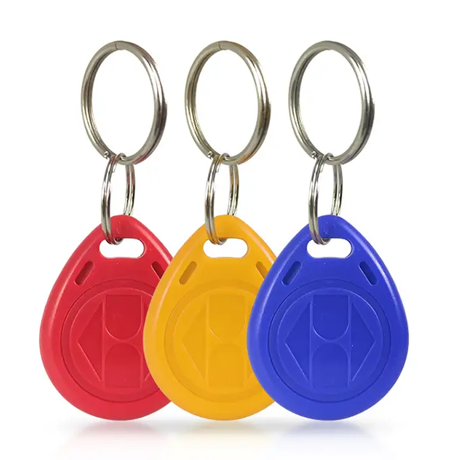
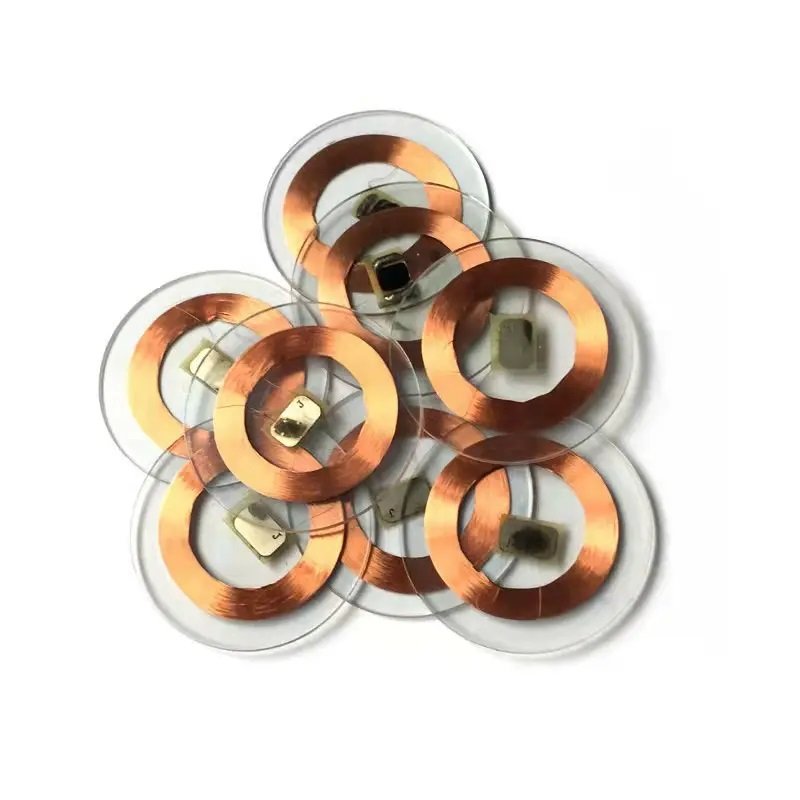
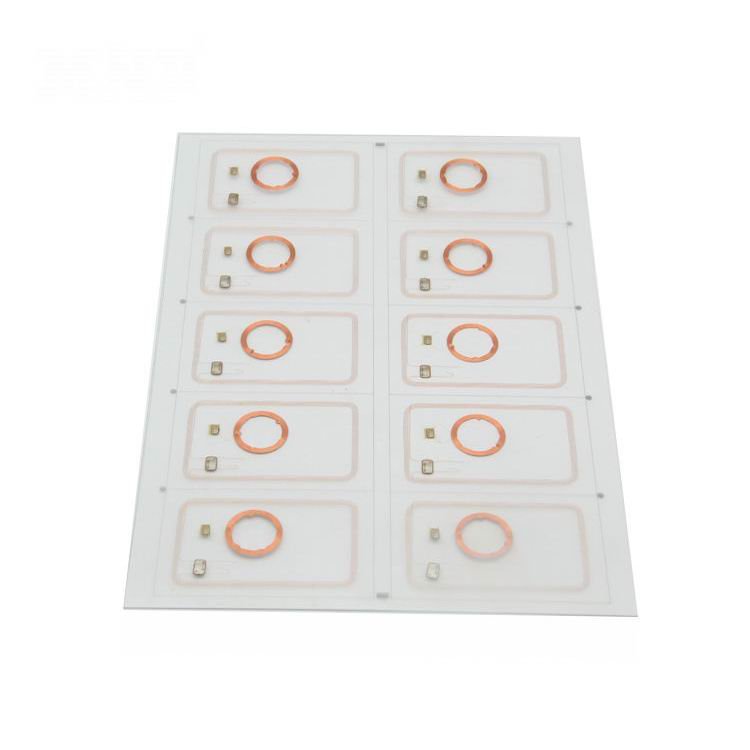
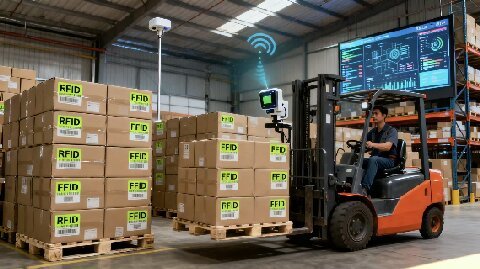
1.What is RFID? -Radio frequency identification, or RFID, is a generic term for technologies that use radio waves to automatically identify people or objects. There are several methods of identification, but the most common is to store a serial number that identifies a person or object, and perhaps other information, on a microchip that is attached to an antenna (the chip and the antenna together are called an RFID transponder or an RFID tag). The antenna enables the chip to transmit the identification information to a reader. The reader converts the radio waves reflected back from the RFID tag into digital information that can then be passed on to computers that can make use of it.
2.What's the difference between read-only and read-write RFID tags?
3.What's the difference between passive and active tags? -Active RFID tags have a transmitter and their own power source (typically a battery). The power source is used to run the microchip's circuitry and to broadcast a signal to a reader (the way a cell phone transmits signals to a base station). Passive tags have no battery. Instead, they draw power from the reader, which sends out electromagnetic waves that induce a current in the tag's antenna. Semi-passive tags use a battery to run the chip's circuitry, but communicate by drawing power from the reader. Active and semi-passive tags are useful for tracking high-value goods that need to be scanned over long ranges, such as railway cars on a track, but they cost more than passive tags, which means they can't be used on low-cost items. (There are companies developing technology that could make active tags far less expensive than they are today.) End-users are focusing on passive UHF tags, which cost less than 40 cents today in volumes of 1 million tags or more. Their read range isn't as far"typically less than 20 feet vs. 100 feet or more for active tags"but they are far less expensive than active tags and can be disposed of with the product packaging.
4.What is the read range for a typical RFID tag? -There really is no such thing as a "typical" RFID tag, and the read range of passive tags depends on many factors: the frequency of operation, the power of the reader, interference from other RF devices and so on. In general, low-frequency tags are read from a foot (0.33 meter) or less. High-frequency tags are read from about three feet (1 meter) and UHF tags are read from 10 to 20 feet. Where longer ranges are needed, such as for tracking railway cars, active tags use batteries to boost read ranges to 300 feet (100 meters) or more.
5.What is tag collision? -Tag collision occurs when more than one transponder reflects back a signal at the same time, confusing the reader. Different vendors have developed different systems for having the tags respond to the reader one at a time. These involve using algorithms to "singulate" the tags. Since each tag can be read in milliseconds, it appears that all the tags are being read simultaneously.
6.What is energy harvesting? -Most passive RFID tags simply reflect back waves from the reader. Energy harvesting is a technique in which energy from the reader is gathered by the tag, stored momentarily and transmitted back at a different frequency. This method may improve the performance of passive RFID tags dramatically
7.What is a chipless RFID tag? -"Chipless RFID" is a generic term for systems that use RF energy to communicate data but don't store a serial number in a silicon microchip in the transponder. Some chipless tags use plastic or conductive polymers instead of silicon-based microchips. Other chipless tags use materials that reflect back a portion of the radio waves beamed at them. A computer takes a snapshot of the waves beamed back and uses it like a fingerprint to identify the object with the tag. Companies are experimenting with embedding RF reflecting fibers in paper to prevent unauthorized photocopying of certain documents. Chipless tags that use embedded fibers have one drawback for supply chain uses��only one tag can be read at a time.
8.I've heard that RFID doesn't work around metal and water. Does that mean I can't use it to track cans or liquid products? -Radio waves bounce off metal and are absorbed by water at ultrahigh frequencies. That makes tracking metal products, or those with high water content, difficult. However, good system design and engineering is beginning to overcome this shortcoming. Low- and high-frequency tags work better on products with water and metal.
|
| Copyright © 2004-2009 SAFESTAG All Rights Reserved. |